aboriginal
resources
Go
to
Ngadjonji
History
of the Rainforest People
The original inhabitants of the rainforest country around Malanda in Far North Queensland
caution! This site contains images of people now deceasedNgadjonji people history at Earth Science Australia (highly recommended)
Ngadjonji
people history (external link to same material Sydney University)
Geoarchaeology + The Wisdom of the Elder
Aboriginal Stone Axehead
Restoration
caution!--this site is dedicated to the memory of a Yidinji elder
(now
deceased)The site contains photographs of this person.
about
the project... An
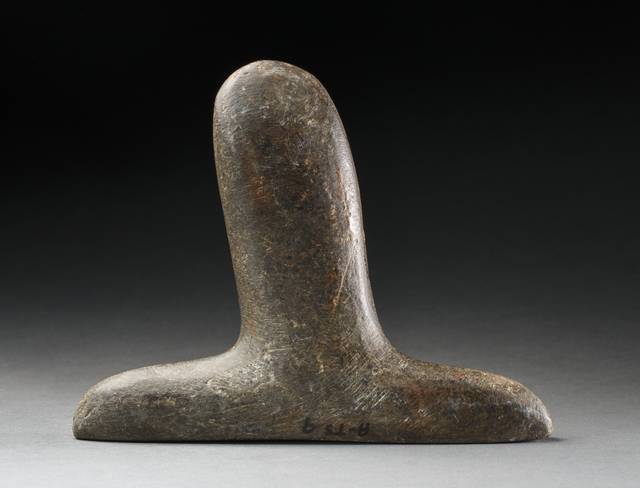
"axehead" is a general name for a large stone tool
Click
on small images for larger images
1.How to restore an ancient stone
axehead
to functional condition
using
traditional methods and materials
2. Geoarchaeology - A
multi-dimensional
approach to functional analysis
or
how we used rock type, edge angles and
scratch marks to figure out
the
uses and origins of each of the
stone tools
3. Terrain analysis - tracing the
1000km trade
route of axe #4
from Mt.
Isa to Herberton
4. Environmental Reasoning on the Exposure of the Axeheads
5. Each tool tells
its story +
the wisdom of the elder
where
our scientific analysis was
wrong
and
corrected by first hand
knowledge
Axeheads are highly specialised and require a sophisticated knowledge of geology, physics and chemistry in their production as this website will show.
The higher the level of craftsmanship / specialisation, the more useful and more highly regarded they are.
Axeheads also provide an opportunity for trade and interaction with other groups of people.
The five stone tools found
under Mt. St. Bernard College in May 1998
Nungbana
(George Davis) -Yidinji elder
outlines how to put a handle on an axe
Heating
axeheads prior to using resin "glue"
from the lower parts of the grasstree
Spreading
resin plus activated carbon charcoal
from tree root on heated and softened, greenish,
split lawyer cane( the handle)
Putting hot resin/charcoal mixture on axehead
cane to wrap handle
The
axe being restored to functional conditionCompleted axe and handle
courtesy
the
Ngadjon-ji people website
or how we used rock type,
edge angles and scratch marks to figure out
the uses and origins of each of the stone tools
- Using false colour image processing to highlight worked areas of stone and scratch mark patterns
- using scratch mark patterns to determine degree of use, nature and direction of motion
- using edge angles to determine hardness and nature of material cut
- the metamorphic rocks that comprise axeheads 1,2,3 and 4 have unique properties
How did axehead number 4 travel the 1000km from the Kalkadoon area near Mt. Isa to Herberton? We assumed that travel took place in early to mid-winter June-July)for the following reasons:
- still some water flow in rivers,
- rivers around the Gulf would be avoided because of the need to swim, brackish water difficult swampy terrain and large crocodiles
- some shade most leaves yet to drop
- game starting to concentrate aroud drainage basins as outlying terrain begins to dry)
- it would then be possible to follow major drainages with all crossings between watersheds at daily travel distances of less than 30km

- One route through the middle of the Gregory Range following the Gilbert River
- and another southerly route, crossing the Great Dividing Range and following the coastal rivers south and skirting the southern end of the Gregory Range
- it is interesting to note that both routes follow a common path for only a short distance but that the two points where they meet are the sites of present day aboriginal communities
- although the axeheads were collected in June-July they were probably not traded until just before the wet season when people would naturally gather around the few remaining water holes and would therefore be easier to find
- the Kalkadoon axehead from the Mt. Isa area would probably be traded for particular rainforest timbers with unique properties , rainforest coloured feathers in shades and textures not found in the drier interior and seashells which were in turn traded up from the coast
Environmental Reasoning on the Exposure of the Axeheads
The reasons why these axeheads
were able to be found in the first
place , and why more axeheads are being found now, is mainly concerned
with changes in the environment. By looking at environment when the
axeheads were made and comparing that to the present environment, we
can produce reasoning as to why they were exposed.
It is important to realise that when the Aboriginal people mioved to a
different place to live, that they usually moved in cycles. That is ,
they will start at one spot , move to a few others as the cycle of life
and food supply progresses, but at some later stage will most likely
return to the oroginal spot and so on. Because of this , they leave
certain things such as axeheads specificially designed for a particular
food supply behind, so that they may be used again when they return to
the same spot.
This saves them carrying heavy items from place to place. Acommon place
to leave axeheads so that they can be foriun again may be along rivers,
near a favourite campsite or a distinguishing tree or feature.
Following European occupation of the bush, Aboriginals were deterred
from living in the bush, a lot of their axeheads have been left behind.
The main reason why these tools are being found now is recent
degradation of the land.
In the past:
- the land had a heavy plant cover
- runoff was slow ad over a long period of time
- soils were held inplace by roots
- has been repeatedly logged for building materials
- has been repeatedly burnt either by accident or on purpose
- has had its drainage systems and stream banks altered by tin mining
- has had extensive clearing and numerous roads bulldozed for tin mining
- has had land cleared for farming often right up to the river banks
- the result has been massive soil erosion in drainage basins
- the result has been massive, rapid, short lived runoff and the rapid erosion of stream banks
Triangular marks found on stone tools are often the result of plow or bulldozer impacts.
Each tool tells its story + the wisdom of the elder where our scientific analysis was wrong and corrected by first hand knowledge
END