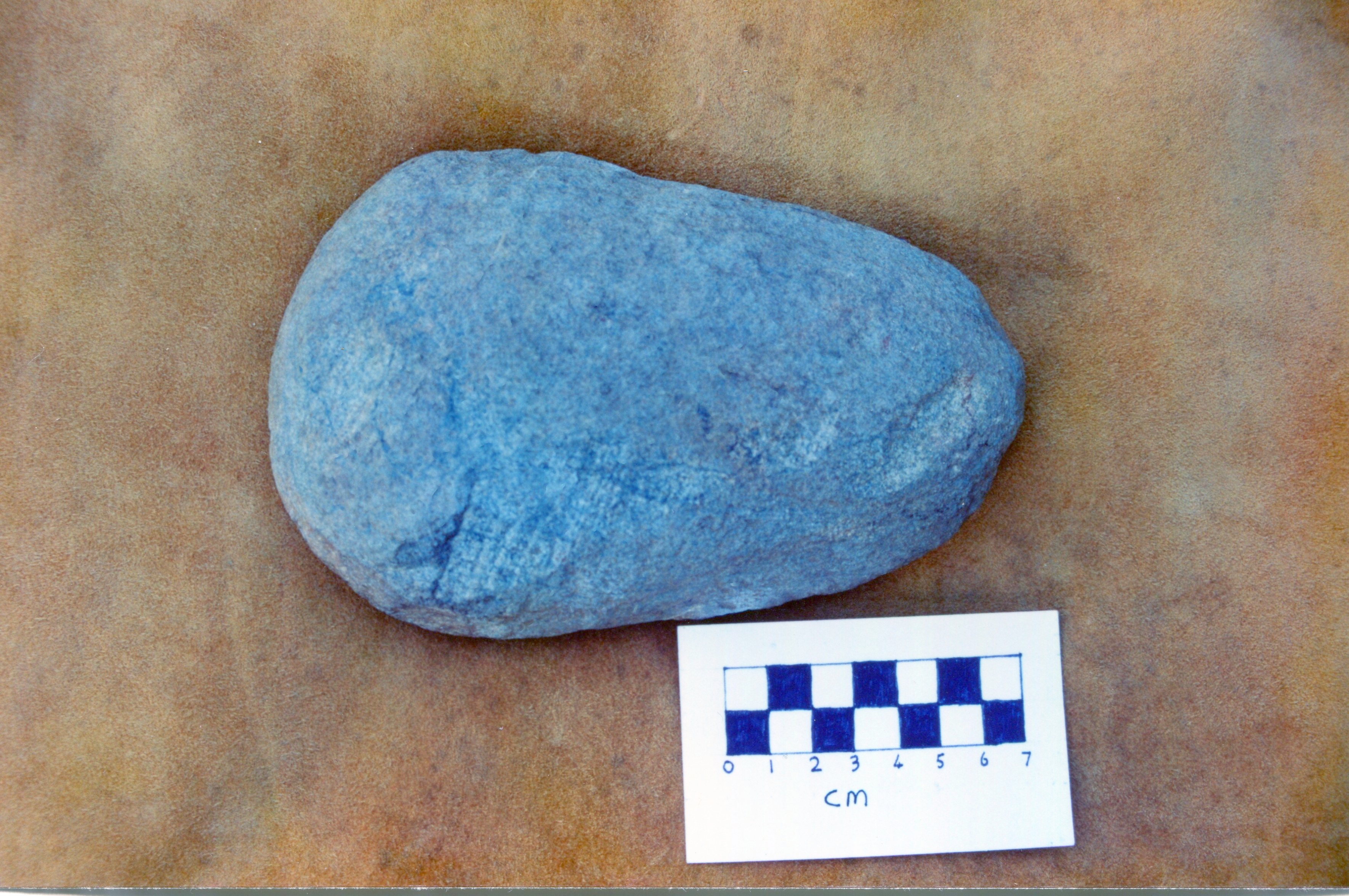
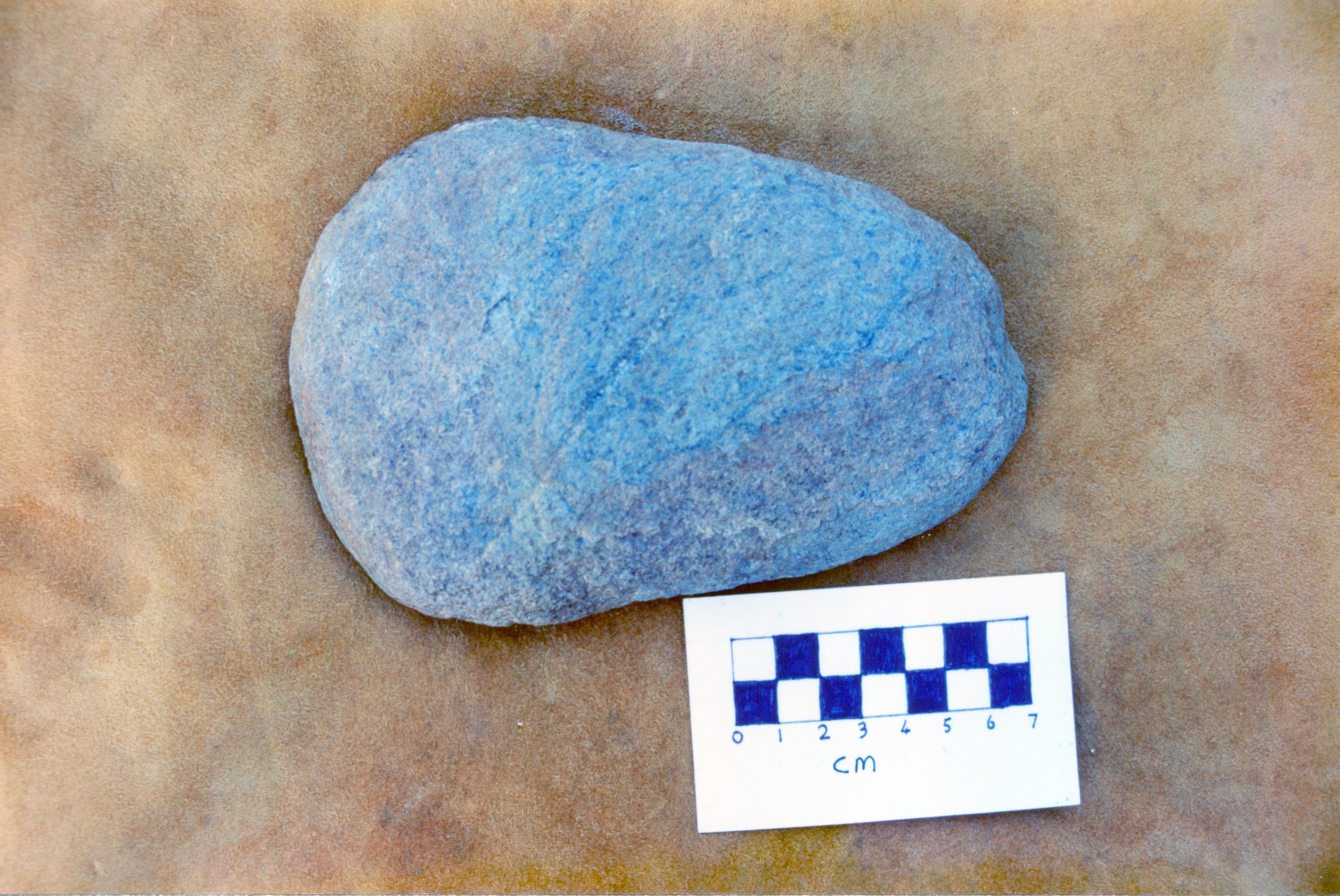
Story of Axehead 1


axe 2
axe 3
axe 4
B&W scratches on axe 1

Axehead number one has a very minimal edge angle of 38 degrees and is nearly unmarked. This tells us that this axehead has not been used much, or if it has, then on a soft to medium-hard material. The 38 degree angle is close enough to the 26-35 degree range for us to say that this stone was used for cutting.
The host-rock is thermally metamorphosed quartzite.
When we look at the hardness of the stone, compared with the most
likely material worked, we can say that because this stone is quite
hard it was probably used to cut/chip medium-hard materials such
as bone and medium hard wood.
The axehead is 175mm long, 115mm wide at the head and 70mm wide at the
other end and a light brown color with two black stains on it.
Under the microscope we found that the grains were glassy and interlocked with a mosaic texture. There were no signs of cementation but there was a black impurity believed to be biotite.
All of these properties match the identity of the rock from a local home of a student who lives in Irvinebank which is situated on the Hodgkinson Basin.