Using scratch mark patterns to determine the degree of use, nature and direction of motion of stone tools


Scratches and direction of motion
Scratch interpretation of individual axeheads
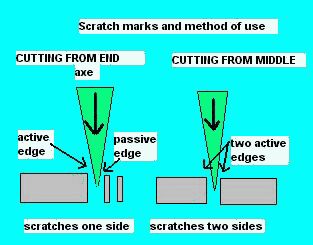
Active and passive cutting edges
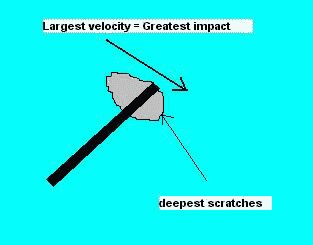
Velocity / impact and scratches
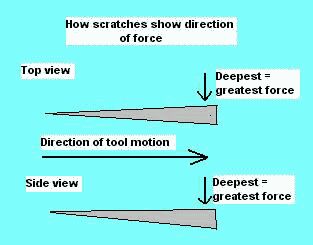
Scratch line details and interpretation
Axe One

#1 side A thermally metamorphosed Quartzite
hached area is a local identification mark,
wide edge and robust design indiate heavy work
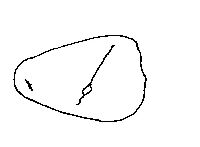
#1 side B shows handle attachment grove, location Herberton Q
Axe Two
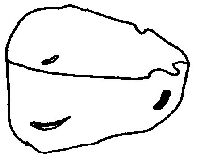
#2 side A quartzite, horizontal bedding plane still evident,
medium edge angle indicated medium to soft material cut with this axe
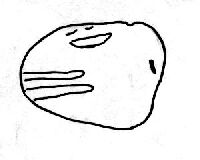
#2 side B nick at top is handle attachment point, location Herberton Q
Axe Three
#3 side A rhyolite lava, highly polished possibly ceremonial,
nick on top for handle, sharp edge used for soft materials
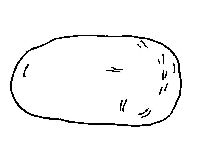
#3 side B fine curving grinding marks visible, location Herberton Q
Axe Four
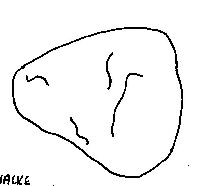
#4 side A greywacke, trade item from 1000km distant, very regular shape,
we retrace the trade route using terrian analysis
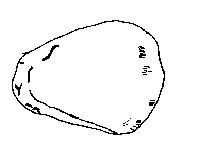
#4 side B possibly Kalkadoon from Mt. Isa area, wear scratches
on one edge only indicated one active and one passive cutting surface
i.e. it chops stuff off from one end rather than from the middle,
origin near Mt. Isa, Q approx 1000km from where it was found in Herberton Q
Axe Five
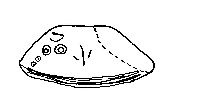
#5 side A , grinding stone , circles are 360 million year old crinoid fossils(stem parts)
, has green malachite stain, since malachite (copper mineral)
is toxic could not have been used for food
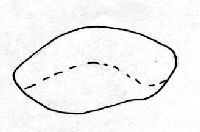
#5 side B dashed line show boundary between pitted crushing pattern
and smooth rolling surface, origin Chillagoe,
approx 150 km from where it was found in Herberton Q
Active and Passive Cutting Edges